What if we could no longer see the wage gap? Not because it closed, but because the data that proves it disappeared overnight.
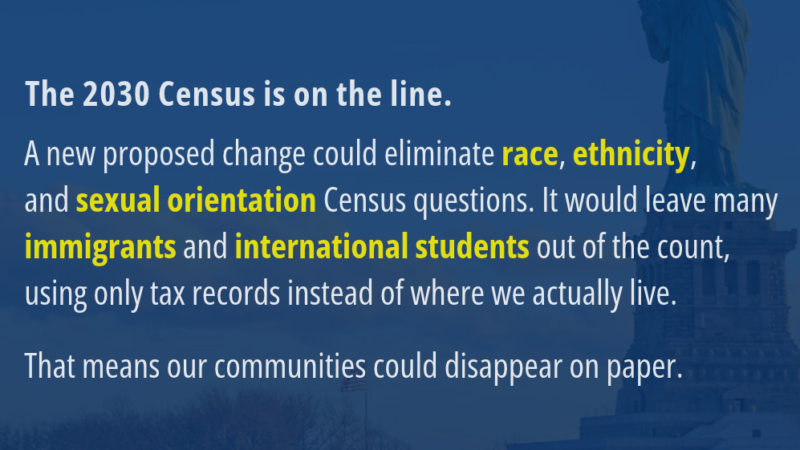
That’s what’s at stake right now. The U.S. Census Bureau has proposed a rule that would leave millions of people out of the 2030 Census and erase critical data on race, ethnicity, and sexual orientation.
Why this matters for equal pay
We can’t close pay gaps we can’t see. Census race and ethnicity data are the foundation for many of the surveys and studies researchers use to understand inequities across the country, data that is critical to measuring and fighting to close the gender and race wage gaps. Every U.S. census has collected this data in some form since the very first one in 1790.
The pay gaps we spotlight for Black women, Latinas, LGBTQ+ workers, and so many others depend on reliable demographic data that tells the full story. When the data disappears, so does our power to identify and address inequities.
What the proposed rule would do
This rule would:
- Exclude undocumented people, international students, work visa holders, refugees, and asylum seekers from the apportionment count for the first time in history
- Ban questions about race, ethnicity, and sexual orientation, breaking with more than 200 years of collecting race and ethnicity data
- Count people based on their tax records instead of where they actually live, making it more likely that people get counted in the wrong place
The Census is supposed to count everyone once, only once, and in the right place. The Constitution requires a count of all “persons.” This rule moves us away from both.
Who gets hurt
Women, people of color, LGBTQ+ people, and immigrant communities will be hit hardest. Census data decides which schools, hospitals, and roads get funded. It also helps us enforce civil rights laws and spot patterns of discrimination. Without accurate data, it gets harder to close pay gaps, address workplace discrimination, tackle health disparities, and provide essential services to the communities that need them most. Erasing the data won’t erase the inequities. It will just make them harder to prove and harder to fix.
Make your voice heard by November 2
Every comment submitted to the federal government in opposition to this proposal becomes part of the official record, and the Bureau is required to review them all. Your comment matters.